
An HR management system is software that helps businesses manage employee records, attendance, leave, onboarding, and other HR processes in one place. It simplifies the full HR workflow so teams can work faster and with fewer mistakes. It also helps keep employee records organized for future reference, reporting, and internal reviews.
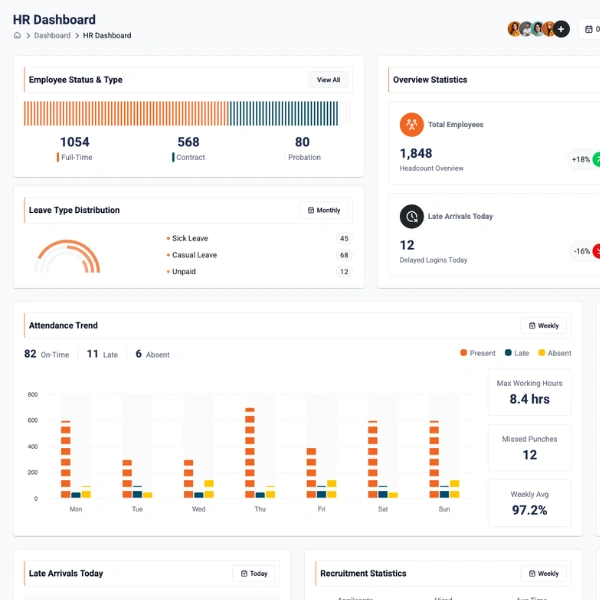
HR Management System
Simplify every part of human resource management from employee records and attendance tracking to leave management, onboarding, and reporting. Built for growing businesses, this HR platform helps HR teams, managers, and leadership reduce manual work, improve consistency, and manage people operations with greater confidence.
- Centralize HR processes in one system.
- Improve employee data accuracy and access.
- Streamline attendance, leave, and onboarding.
- Gain visibility into workforce activity and trends.
About HR Management Software
Human resource management is one of the most important operational functions in any business. Every day, teams need to manage employee records, track attendance, handle leave requests, support onboarding, and keep workforce information organized. When this work is handled manually, the process becomes slower, more error-prone, and harder to scale.
An HR management system brings structure and automation to this process. It centralizes employee data, supports day-to-day HR workflows, and creates a more reliable system for HR teams, department managers, and business leaders. For businesses that want to grow without increasing administrative complexity, HR software becomes a core operational layer rather than just an internal support tool.
Why Businesses in Nepal Need HR Software
As businesses expand, HR management becomes more complex. Different teams may follow different schedules, employees may work across locations, and HR departments may need to handle onboarding, attendance, leave, and policy management at a larger scale.
Manual spreadsheets and disconnected systems often make HR harder to manage. A dedicated HR system helps reduce repetitive tasks, improve record accuracy, and support faster decision-making. It also gives managers a clearer view of employee information, attendance patterns, leave activity, and workforce structure across the organization.
HR Management System Benefits
- Reduce manual HR work through automation.
- Improve accuracy across employee records and workflows.
- Centralize HR data in one secure system.
- Support smoother attendance and leave management.
- Improve onboarding and employee record handling.
- Scale smoothly as headcount and departments grow.
- Improve reporting for workforce planning and reviews.
Powerful Features of HR Software
Make HR feel less like a stack of admin tasks and more like a smooth, dependable process. With the right HR software, your team can manage employee records, attendance, leave, onboarding, and reports in one place without the stress of manual follow-ups and scattered files.
Employee Information Management
Keep all employee records organized in one reliable system. Instead of managing details across spreadsheets, folders, and email threads, your team can access personal information, job records, department details, and employment history more easily. This improves accuracy and makes everyday HR work much easier to manage.
Attendance and Time Tracking
Track attendance more efficiently without relying on manual registers or disconnected tools. The system helps record working hours, shifts, attendance status, and related activity in a structured way, so HR and managers can stay updated with less effort. That means better visibility and fewer record-keeping issues.
Leave Management
Handle employee leave requests with a simpler and more transparent process. The system helps employees apply for leave, managers review requests, and HR maintain proper records without unnecessary back-and-forth. This saves time and creates a smoother experience for everyone involved.
Employee Onboarding Workflow
Give new employees a more organized and professional start. An HR management system helps your team manage onboarding steps, collect documents, assign responsibilities, and make sure every new hire is properly recorded from day one. That creates a better first impression and reduces administrative confusion.
Policy and Document Management
HR teams often need quick access to employee documents, contracts, handbooks, and internal policies. A centralized system makes these records easier to store, update, and retrieve whenever needed. This helps keep HR operations more organized and reduces dependency on scattered files.
Real-Time HR Insights and Reporting
Understand what is happening across your workforce with clear dashboards and live reports. You can track attendance trends, leave activity, employee distribution, and HR performance without digging through disconnected spreadsheets. Better visibility leads to better decisions, especially as your company grows.
HR Software Use Cases
HR software is useful in everyday business situations where organization, consistency, and people management matter. From employee onboarding to attendance reporting, it helps your team stay structured and confident at every step.
Employee Record Management
Maintain complete employee records without the usual paperwork overload. The system helps store and update profile details, employment history, department information, and document records in one place, so your team can work more efficiently. This creates a better experience for both HR staff and employees.
Attendance Monitoring
Managing attendance manually can be time-consuming and difficult to maintain accurately. HR software helps track daily attendance, working hours, absences, and shift information with less effort while supporting better visibility for managers. That means fewer errors and less pressure on HR teams.
Leave Request Handling
Employees need a simple way to request leave, and managers need a reliable way to approve or review it. HR software helps manage this process in a structured and transparent way, reducing confusion and making leave tracking much easier. It also keeps records clean and accessible.
Onboarding and Employee Setup
Bringing new employees into the company involves multiple tasks and documents. HR software helps organize onboarding steps, manage new hire information, and make sure nothing important gets missed. That creates a more professional and consistent onboarding process.
Document and Policy Access
HR teams and employees often need access to contracts, letters, forms, and internal policies. An HR management system helps organize these records in one place, making them easier to access and manage. This reduces delays and supports smoother communication.
Multi-Location HR Handling
If your business operates across more than one office or branch, HR coordination can quickly become complicated. A good HR system helps you manage employee records, attendance, and policies in one place. This makes it easier to keep everything aligned, even across multiple locations.
HR Reporting and Reviews
Strong HR records matter when it is time for reviews, planning, or internal reporting. HR software gives you structured reports and accurate history that are easy to access and share. This saves time and supports better workforce decisions across the business.
Data Security, Privacy and Compliance
HR data includes sensitive employee and organizational information, so security should never be an afterthought. A reliable HR system protects your data with strong safeguards that help maintain privacy, accountability, and business trust.
End-to-End Encryption
Your HR information is protected both while it is being transferred and while it is stored. Using AES-256 encryption helps keep sensitive employee data safe from unauthorized access and reduces the risk of breaches. This gives businesses peace of mind when handling confidential workforce records.
Role-Based Access Control
Not everyone in the company needs access to every HR detail. Role-based permissions make sure users only see the information relevant to their job, which helps protect sensitive data and reduce internal risk. It also keeps workflows more organized and accountable.
Complete Audit Logs
Every action in the system is recorded so you have a clear trail of what happened and when. This is useful for internal checks, policy reviews, and accountability across teams. If questions ever come up, you can review the history quickly and confidently.
Secure Cloud Infrastructure
An HR system should be available when you need it and protected against unexpected disruptions. Hosted on AWS with a 99.9% uptime SLA, automated backups, and disaster recovery, the platform is built for reliability as well as security. That means your HR operations stay stable and accessible.
How to Choose the Best HR Software in Nepal
Choosing HR software is not just about features. It is about finding a solution that fits your team, supports your daily HR processes, and makes people management easier from day one.
Accuracy and Automation
Look for software that removes repetitive manual work and reduces the risk of record errors. A strong automated system should help your team manage HR tasks faster while keeping employee data accurate and organized. That kind of reliability saves time and builds trust.
Workforce Visibility
HR software should help you clearly understand attendance, leave, employee records, and workforce structure in one place. The best systems make visibility feel built in, not something you need to build manually from scattered tools. That means better planning and fewer surprises.
Ease of Use
An HR system should be simple enough for your team to use without a steep learning curve. A clean interface, clear workflow, and easy navigation can make a big difference in day-to-day efficiency. When software feels intuitive, your team is more likely to use it well.
Data Security
Since HR data is highly sensitive, security should be a top priority. Look for features like encryption, access control, and secure storage to help protect employee information. A secure system helps your business stay responsible and trustworthy.
Integration Capability
HR works best when it connects smoothly with the tools you already use. Integration with payroll systems, attendance devices, accounting tools, and internal platforms can reduce duplicate work and improve accuracy. It also creates a more seamless workflow across departments.
Scalability
Your HR needs may be manageable today, but they may grow quickly as your team expands. Choose a solution that can handle more employees, more departments, and more workflow complexity without forcing you to switch systems later. Scalability protects your investment and supports long-term growth.
Reporting and Analytics
Good HR software should do more than store employee records. It should also help you understand attendance patterns, leave trends, workforce distribution, and HR activity in a way that supports planning and accountability. Clear reports make it easier to make smarter business decisions.
Customer Support
Even the best software is more valuable when support is responsive and helpful. Look for onboarding assistance, quick issue resolution, and regular updates so your team always has support when needed. Reliable service can make the entire experience smoother and less stressful.
Frequently Asked Questions
Businesses need HR software because manual HR work takes time and increases the risk of errors. As a company grows, HR becomes more complex with more employees, more records, more attendance tracking, and more leave requests to manage. HR software helps reduce that complexity by automating key tasks and keeping everything consistent.
Yes, HR software is very useful for small businesses. Even if you have a small team, you still need to manage employee records, attendance, and leave properly. HR software helps small businesses save time, reduce admin work, and build a more professional HR process from the start.
Yes, a good HR system can track attendance, absences, working hours, and leave requests in one place. This helps businesses stay organized without relying on manual registers or disconnected spreadsheets. It also reduces the chance of errors and missed records.
HR software helps with people management by organizing employee data, attendance, leave, and onboarding processes in one structured system. It makes it easier for HR teams and managers to stay updated, support employees, and maintain proper records. For businesses in Nepal, this is especially helpful because growing teams need more consistency and visibility.
Let's Build Your
Next Website or Digital Solution
Planning a new website, eCommerce store, or custom software project? Talk to Webtech Nepal's development team in Kathmandu about your requirements, project scope, and budget.
